On July 23, 1983, an Air Canada Boeing 767 flew from Montreal to Edmonton, with a stop in Ottawa.
The flight plan required 22,300 kilograms of fuel.
The number on the fuel slip matched that plan exactly.
The unit did not.
Ground crews measured the tanks with mechanical measuring sticks and read 7,682 liters. They multiplied that volume by 1.77 pounds per liter, the factor used for the rest of the fleet.
The correct factor for this airplane was 0.803 kilograms per liter.
Where did the math break?
This 767 was the first airplane in the Air Canada fleet with fuel gauges in kilograms. The navigation computer also required the fuel mass in kilograms, not volume.
The crew and the technicians used pounds per liter and never converted that density into kilograms per liter.
The airplane left with 22,300 pounds of fuel.
That is just over 10,000 kilograms, less than half of what the flight needed.
Halfway through the trip, the engines ran out of fuel.
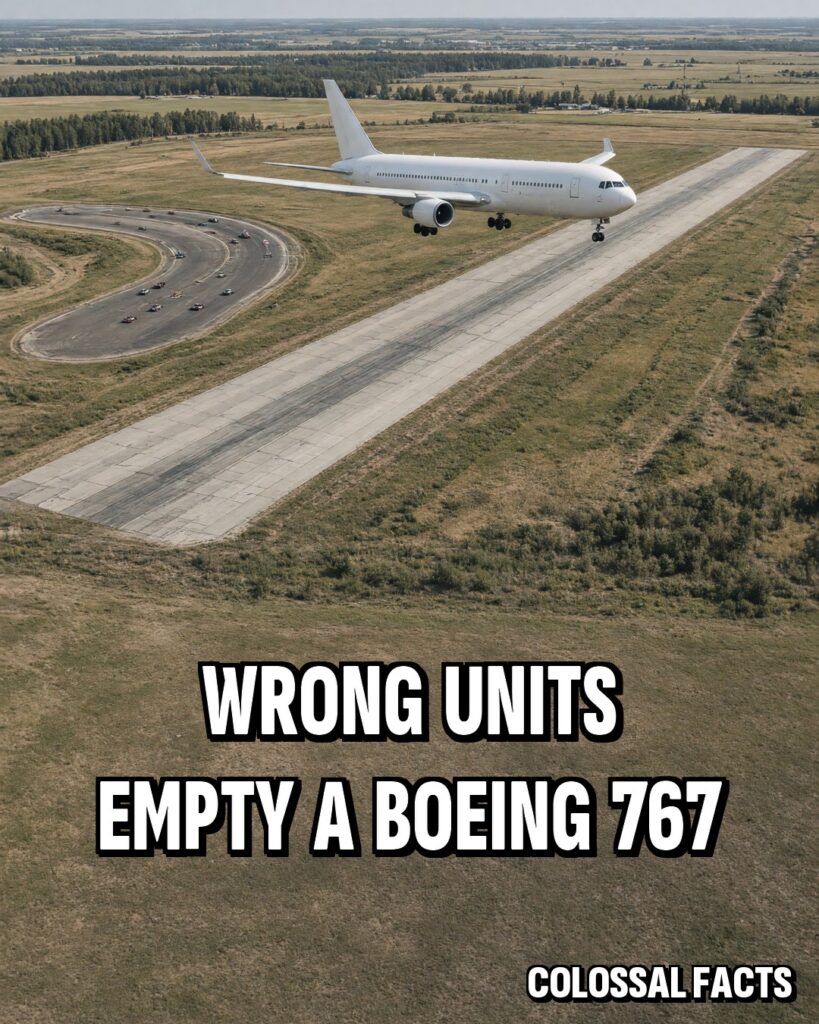
The captain, an experienced glider pilot, and the first officer steered the jet toward a closed runway at Gimli. The runway was already in use as a car racetrack.
They landed.
Nobody died.
The number on the paper was right.
The unit was not.
Enjoyed the story?
Follow Colossal Facts for a new story every day.
Or watch them as short videos on Facebook →