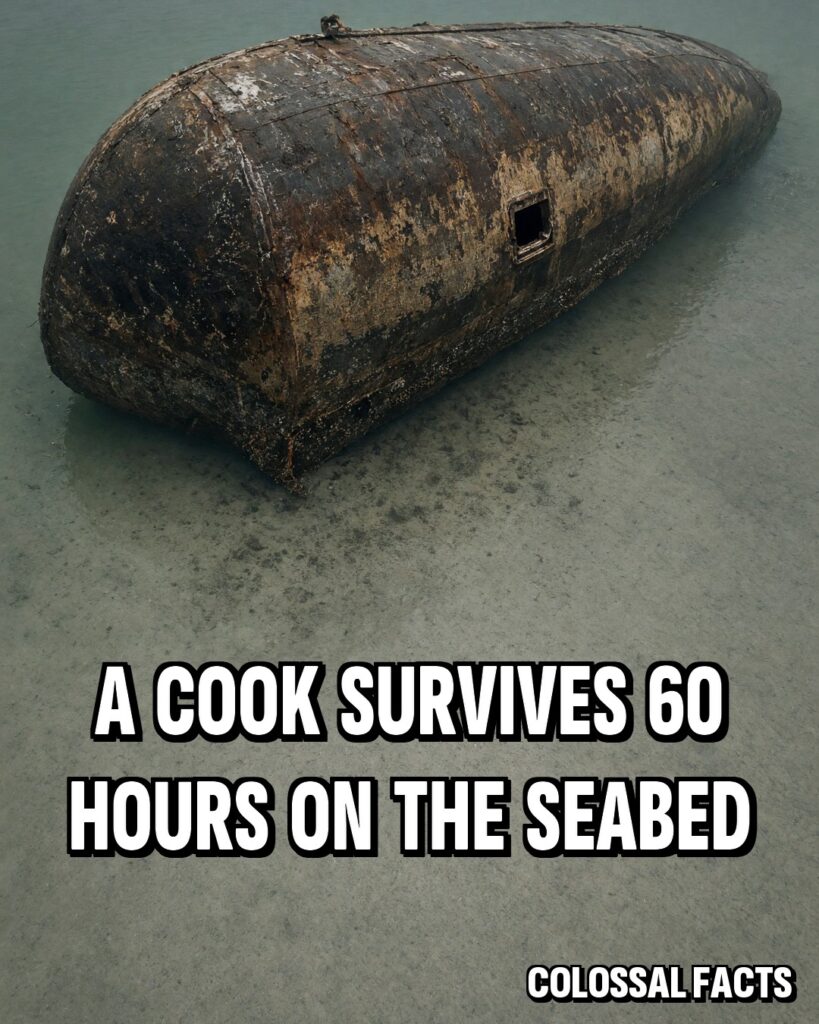
On 26 May 2013, the tugboat Jascon-4 capsized while working to stabilize a vessel off the Nigerian coast, about 20 miles from shore. The ship settled upside down on the seabed, about 100 feet (30 meters) down. Around 5 a.m., cook Harrison Okene, then 29, was in the toilet. The boat sank so fast he could not get out. Water dragged him into another compartment. A small air pocket held there, in a bathroom space of the upside-down hull. He was wearing only underpants.
Everything was black and loud. In later interviews he said he cried and called on Jesus to pull him out and let him see light. He was hungry, thirsty, and numb in the cold water. He also said he heard fish at the bodies of his shipmates, and smelled them. That part of the story rests on his account; eleven other people on the tug did not survive. Nearly 60 hours passed at that depth. A recreational dive to 30 meters usually allows no more than about 20 minutes without decompression. Okene was not diving. He was trapped.
On 28 May, divers from a specialist team, including South African divers working with DCN Diving, swam through the flooded rooms, searching for bodies. A hand reached out of the dark and grabbed one of them. Okene was alive. He knocked and reached out as they approached. The divers got him into a diving bell and then into a decompression chamber. He had to spend many more hours — on the order of two to three days — coming up slowly, so that nitrogen built up in his body at depth would not bubble and cripple or kill him after the rescue.
Prayer did not give him air. The air pocket in the toilet did. The rescue, and the slow decompression that followed, is what brought him back to the surface alive after two and a half days on the seabed.
A rescue that almost missed him
Jascon-4 was a tug working in the oil fields off Nigeria when it overturned. Of the crew, only Okene lived. The divers who found him were not on a rescue clock as if they expected a survivor at 30 meters after two and a half days. They were recovering the dead. In later interviews he described knocking, reaching out, and the moment a diver’s camera light picked him up. Reports at the time said the team came close to missing him in the dark, flooded rooms. Once they had him, the medical problem changed. A person who has been breathing air under pressure at that depth cannot be shot to the surface. Nitrogen in the blood and tissues has to be released slowly in a chamber, or it forms bubbles — the bends — which can be fatal. Okene’s decompression lasted on the order of 60 hours, a second ordeal as long as the first.
Doctors and diving specialists called his survival extraordinary: a shrinking air pocket, cold water, no food, and a depth at which a sport diver would already be planning a short dive. The air that saved him was also what made the way up so slow. His own account of prayer, hunger, and the sounds in the wreck is the only witness testimony from inside the hull. The official facts around it are simpler and solid: the date the tug capsized, the depth, the length of time, the eleven shipmates who did not live, and a cook who left the seabed in a diving bell instead of a body bag.
Sources: Nigerian sailor survives in air pocket for 60 hours – The Guardian, Nigerian cook survives two days under sea – Reuters, Nigerian survivor almost missed rescue diver – AP News