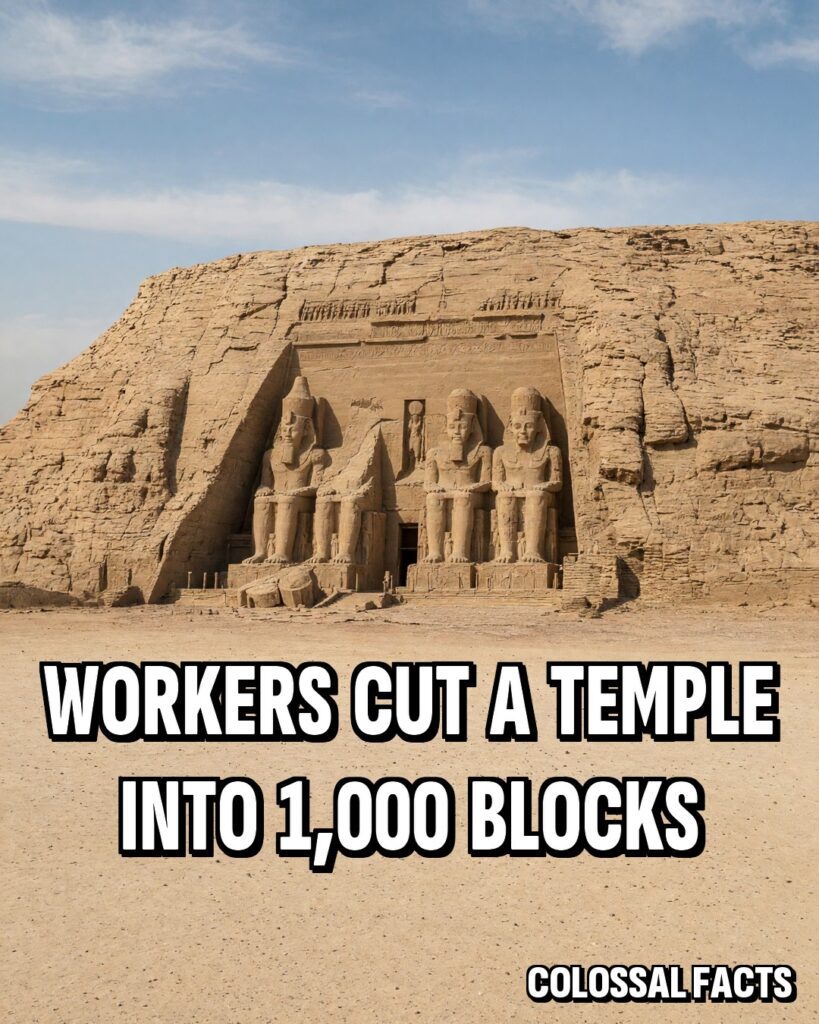
When the Aswan High Dam began filling Lake Nasser, water threatened the sandstone cliffs of Abu Simbel.
The ancient temples were not built. They were carved straight into the rock.
If the water rose, the flood would swallow them forever.
A UNESCO-led campaign did not want a copy. It wanted to save the originals.
Workers cut the sandstone with wire saws and hand saws. The blades moved slowly to avoid damaging the soft stone.
More than 1,000 huge blocks, some weighing up to 30 tons, were numbered and moved into storage.
Then the job reversed.
The blocks were moved to a new site 656 feet (200 meters) inland and 213 feet (65 meters) above the old site.
There they were reassembled inside an artificial hill.
The halls do not hang in the air. They rest under concrete domes, shells that support the weight of the artificial hill above.
And the sun?
The rebuild preserved the original alignment of the temple. Sunlight still enters the inner sanctuary on the same two days each year.
The project cost about $40 million.
In 1968, Abu Simbel reopened in its new location. The dam water was rising, but the temples stood above it.
The stone was cut into pieces.
The temple stayed whole.
Enjoyed the story?
Follow Colossal Facts for a new story every day.
Or watch them as short videos on Facebook →