In 1854, cholera killed one in twenty Chicagoans. The city sat on a swamp with no comprehensive sewer system.
Engineers did not move the people. They lifted the streets and buildings.
The rise reached 14 feet (4.3 meters), making room for the city's first comprehensive sewer system in the United States.
The first masonry building had already made the same trip, and it came up without a crack.
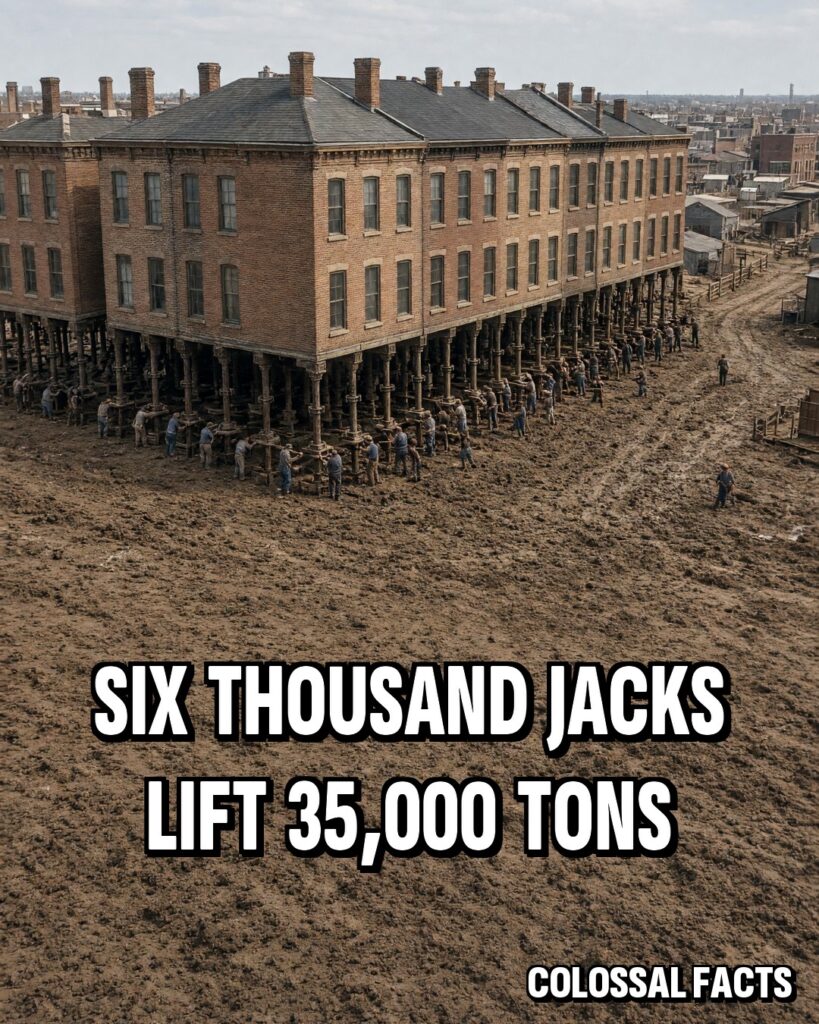
In 1860, engineers raised half a block of Lake Street at once, between Clark Street and LaSalle Street.
The block weighed about 35,000 tons.
Six thousand iron screw jacks sat under it.
Six hundred men turned them in perfect time.
On a signal, each man turned his jacks one notch. The buildings crept up. Then again, for days. New foundations went underneath.
Businesses stayed open. Guests stayed inside.
Albert Pullman, older brother of engineer George Pullman, directed the men below with a whistle. George answered from the street with his own.
Nobody jumped the signal.
And 35,000 tons?
That load equals about 14,000 pickup trucks, assuming 2.5 tons per truck. It did not roll down a road. It climbed a screw while life went on inside.
The city did not flee the mud.
It rose above it.
Enjoyed the story?
Follow Colossal Facts for a new story every day.
Or watch them as short videos on Facebook →