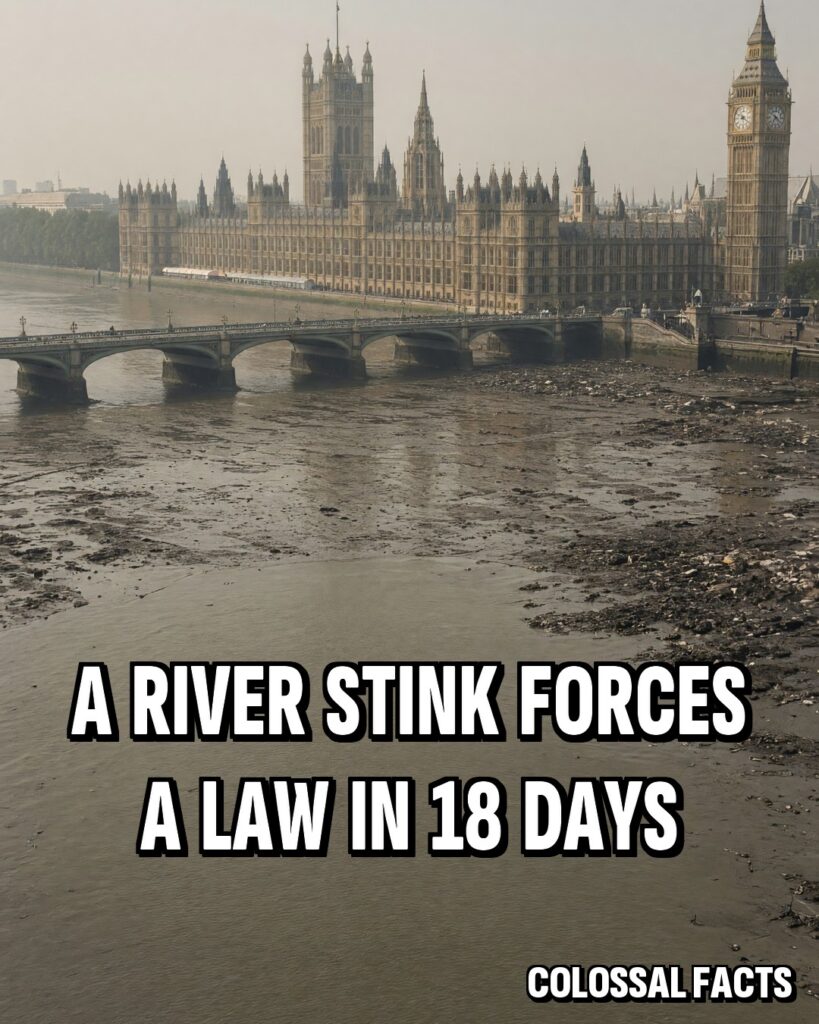
In the summer of 1858, heat baked human and industrial waste along the Thames.
The stink overwhelmed London and reached Parliament.
London was the world's largest city, with more than 2.5 million people. Queen Victoria sat on the throne.
Lawmakers confused the cause of disease with the smell.
They believed cholera spread through the air as a miasma, a foul vapor, rather than through contaminated water.
What scared them?
Not the infection in the water, but the stench rising from the river.
Benjamin Disraeli, the politician who proposed the bill, called the Thames a pool of unbearable horrors.
The bill became law in just 18 days.
Parliament approved £2.5 million, equivalent to more than £250 million today.
Civil engineer Joseph Bazalgette took charge of what became the century's biggest civil engineering project.
Under the streets, 1,100 miles (1,770 kilometers) of drains fed 82 miles (132 kilometers) of new brick-lined sewers that carried waste downstream.
Pumping stations used the biggest steam engines in the world at the time.
The system was completed in 1875.
London's new sewer system helped eliminate cholera by removing contaminated waste from the water supply.
Much of that network still works today.
Fear paid the bill.
Engineering stopped cholera.
Enjoyed the story?
Follow Colossal Facts for a new story every day.
Or watch them as short videos on Facebook →