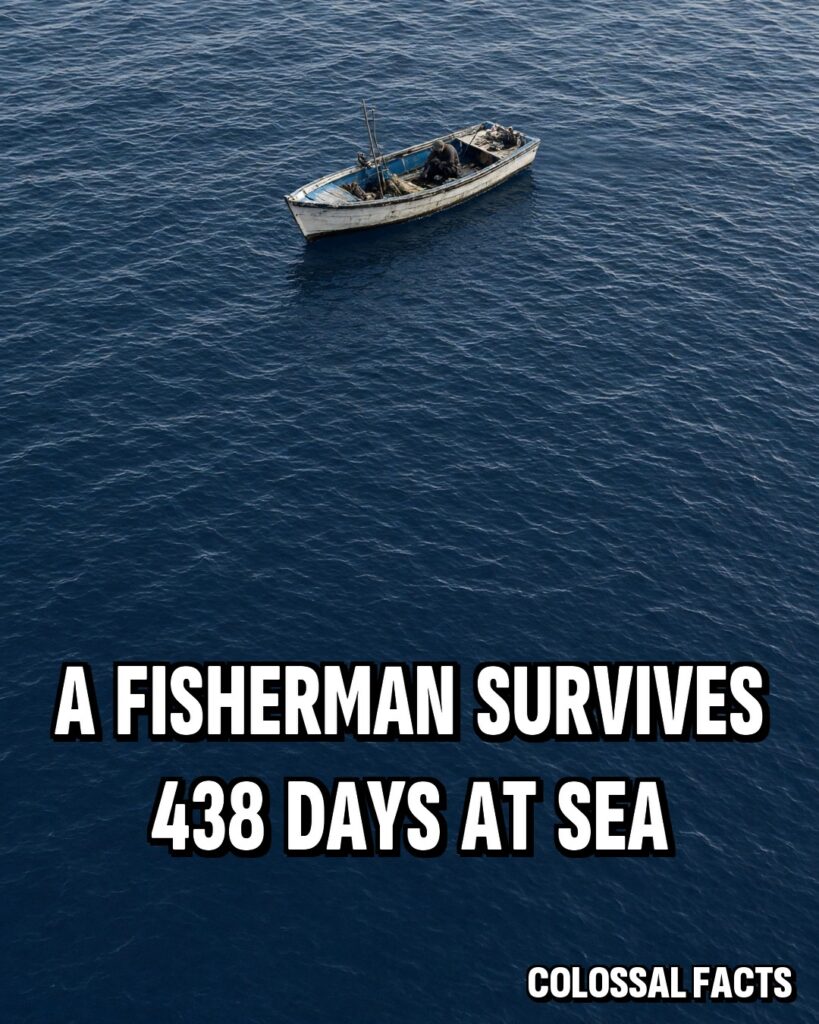
On 17 November 2012, Salvadoran fisherman José Salvador Alvarenga left Costa Azul, near Pijijiapan in Chiapas, Mexico, for a short shark-fishing trip. Young Ezequiel Córdoba was with him. Their boat was open, about 25 feet (8 meters) long, a skiff meant for coastal work, not for a crossing of the Pacific. They had gone out to catch fish, not to cross an ocean.
A storm wrecked the engine and the navigation gear. The two men began to drift. Mexican officials later confirmed that a two-man boat left that coast on that date and was reported missing, and that the vessel found far to the west matched the missing boat. Córdoba died during the voyage. Alvarenga was alone.
What kept him alive
He ate raw fish, turtles, small birds, and sharks, and he drank rainwater. In despair, by his later account, he swallowed bits of his own nails and sang psalms. He counted the moons, one by one. On the 15th cycle he saw land. The diet was grim and limited, but it was enough, with rain, to keep him alive. He was not sailing toward a chosen island. He was drifting with winds and currents across the open Pacific, thousands of miles from the Chiapas coast.
On 30 January 2014, people found him on Ebon Atoll in the Marshall Islands, on a small islet of that atoll. He had been at sea for 438 days. He was naked, gripping a knife, and shouting in Spanish. He was about 37, thinner, but not the wasted skeleton expected after so long without a shore. Local residents gave him food and water and raised the alarm. He was later moved for medical care, and his identity was checked against family and official records in Mexico and El Salvador.
A story that had to be checked
The claim sounded impossible, and it was met at first with doubt. A man cannot easily prove where an open boat has been for 14 months. Officials, fishermen who had known the missing boat, and later reporting, including work by journalist Jonathan Franklin for a book on the 438 days, pieced together a consistent timeline: a departure from Mexico in November 2012, a companion who did not survive, and a landing in the Marshall Islands in January 2014. A Mexico rescue official publicly backed central parts of the account. Ocean-current patterns make a drift from the coast of Chiapas west across the Pacific to the Marshall Islands possible over that many months, even if no one would plan such a voyage in a small open boat.
Alvarenga was treated after his rescue and later told the story in interviews and in Franklin’s book. Some details — how exactly Córdoba died, how many birds or turtles were caught, what a person thinks about after a year of counting moons — rest on his memory of an ordeal with no other witness. The frame around those details is more solid: the missing-boat record, the identity checks, the date he was found, and the simple fact that an 8-meter fishing skiff ended up on Ebon Atoll with a living man in it.
The little open boat was never meant for a year at sea. He still reached land alive.
Fourteen months is longer than almost any other documented survival in a small open boat. The Pacific crossing, the death of a companion, and a landing on a low atoll would sound like a tall tale if the dates, the missing-person record, and the place of rescue did not line up. They do. The little open boat was never meant for a year at sea. He still reached land alive.
Sources: Real-life castaway survived 438 days lost at sea – CNN, Lost at sea: the man who vanished for 14 months – The Guardian, Survival story backed by Mexico rescue official – CBS News