In 2007, ESA's TARDIS experiment sent water bears into open space.
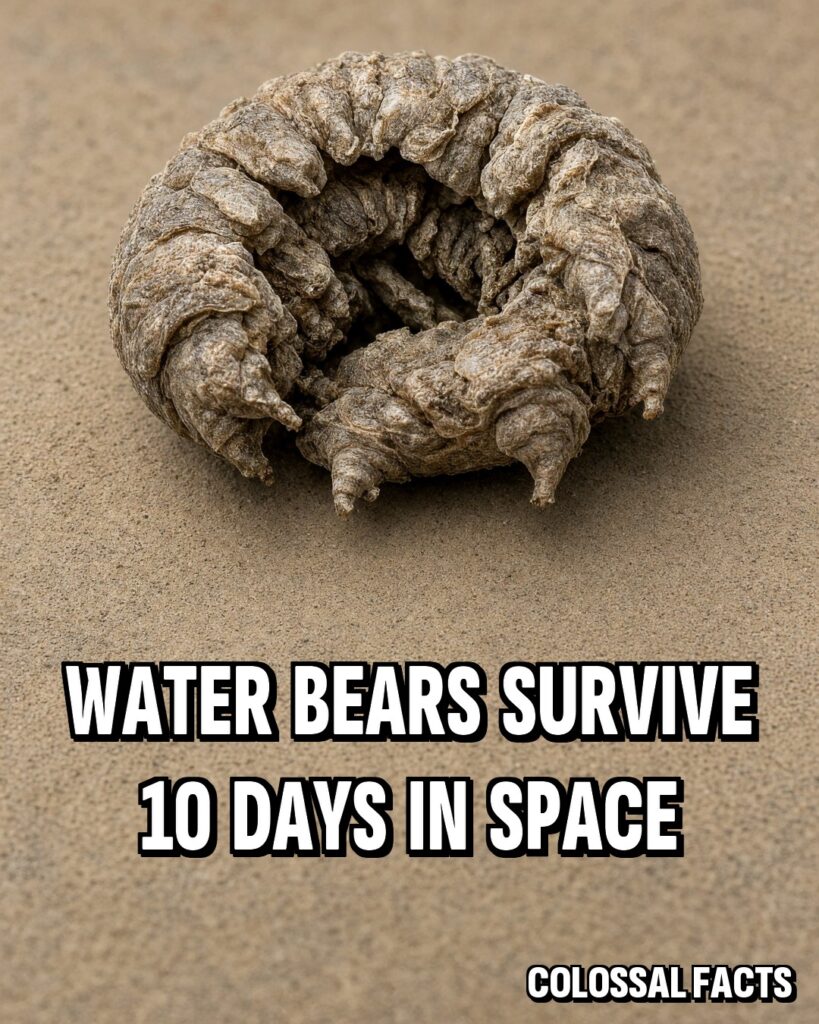
People also call them tardigrades: microscopic animals with eight legs.
About 3,000 rode the Russian research satellite Foton-M3.
The Biopan-6 platform opened their containers on the outside of the capsule.
Nothing stood between them and the vacuum.
For 10 days they took vacuum and radiation, including ultraviolet light, at 160 to 175 miles (258 to 281 kilometers) above Earth.
How do they last with no water?
They curl into a dry ball. One drop is enough to start them moving again.
Under vacuum and milder ultraviolet light, 68% survived.
About half an hour after a wetting, they were active again.
Some later had healthy young.
The hardest trial added the strong ultraviolet rays Earth's air usually blocks.
Only three in that group lived.
Vacuum by itself did not kill them.
Later tests confirmed the same endurance.
They were the first animals proven to survive in open space.
Vacuum does not stop them.
Only the full sun does.
Enjoyed the story?
Follow Colossal Facts for a new story every day.
Or watch them as short videos on Facebook →