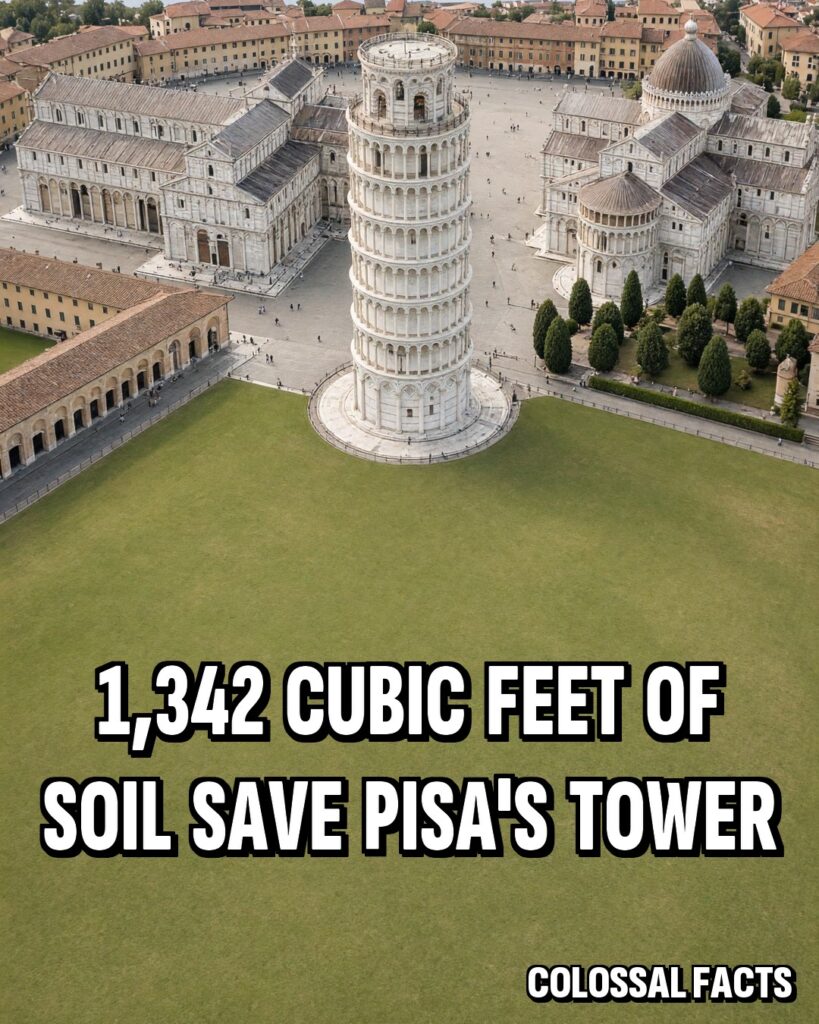
In 1990 the tower in Pisa was closed to visitors. Officials feared it might collapse at any moment.
The Italian government appointed a committee of engineers, architects, and specialists in historical restoration.
Geotechnical engineer John Burland, who helped lead the effort to save the tower, later told Scientific American something unsettling. No matter how many calculations they made, the tower should not have been standing at all.
The reserve?
The soil could bear only 7 percent more load than the tower was already placing on it. Almost no margin.
Crews placed about 660 US tons (600 metric tonnes) of lead on the north side of the base. The weight turned the tower slightly backward, and the masonry stayed untouched.
The lead was only a brake.
The real repair was underground.
Workers drilled 41 holes and carefully took out 1,342 cubic feet (38 cubic meters) of soil from beneath the north side. The tower settled a little that way and reduced its own lean.
It moved back about 17 inches (44 centimeters), to the tilt of the 1830s.
A tourist cannot see the change. That was the requirement.
Stress in the stonework fell sharply, and the lean is still plain to the eye.
The tower still looks crooked.
It is no longer about to fall.
Enjoyed the story?
Follow Colossal Facts for a new story every day.
Or watch them as short videos on Facebook →