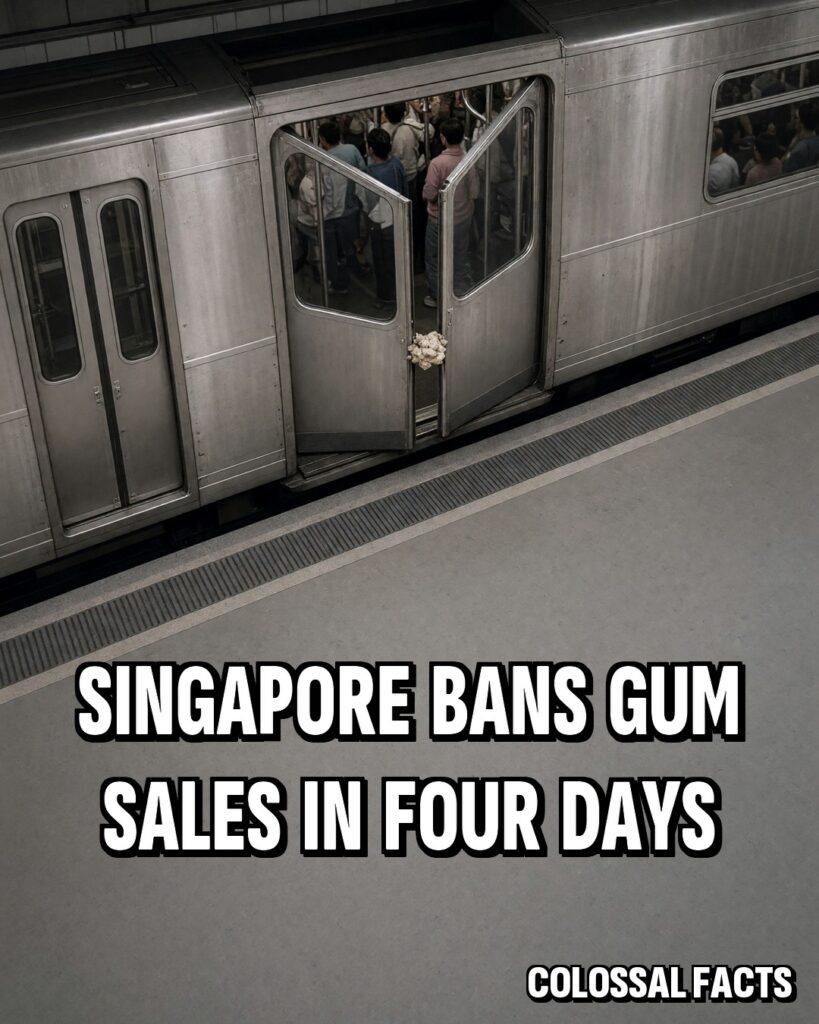
In the summer of 1991, trains on Singapore's metro stopped because of something tiny. Used chewing gum had jammed between the doors.
It kept the doors from closing all the way. And that blocked the whole run.
Authorities pointed to those metro failures as the main reason for a ban. On January 3, 1992, the sale, import, and manufacture of chewing gum became illegal. That was only four days after the measure was announced.
The idea had actually been discussed back in 1983.
What exactly did the ban cover?
Not chewing itself, but the supply of gum.
The costs weighed on the city too. The Housing and Development Board, HDB, spent S$150,000 a year just to clean gum stuck to surfaces.
In 2004 the rules got an exception. Therapeutic gum, including dental gum and nicotine gum, can be bought from a doctor or a registered pharmacist. That is not a free sale of ordinary gum.
So the famous ban is often misunderstood. Chewing, by itself, is not a crime in Singapore.
The measure closes the path to the ordinary counter.
It does not turn chewing into a crime.
Enjoyed the story?
Follow Colossal Facts for a new story every day.
Or watch them as short videos on Facebook →