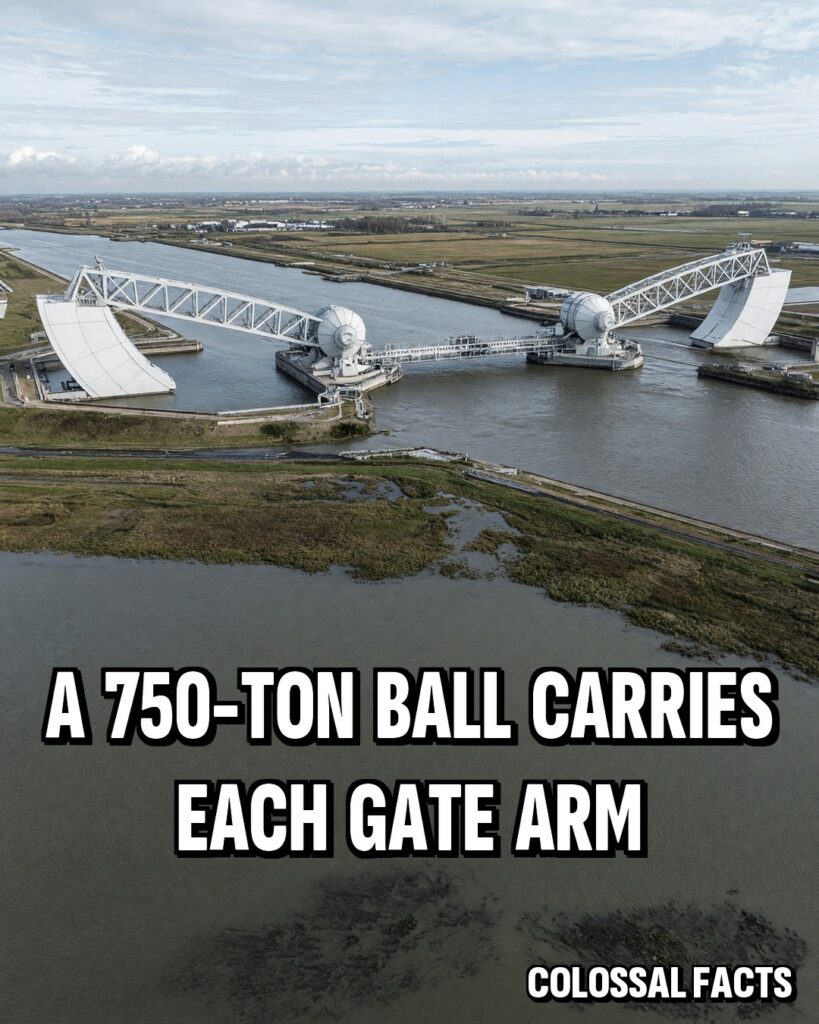
On the Nieuwe Waterweg, the shipping channel into the Port of Rotterdam, the Maeslant Barrier stands ready.
Built between 1991 and 1997, its gates sit in dry docks on either side. The channel between them is 1,181 feet (360 meters) wide and stays open for ships.
How does it close?
A computer linked to weather and sea-level data decides when to act. The gates float out of the docks, swing toward each other, and block the whole channel. Then they fill with water and settle on the bottom in two hours.
No other flood barrier in the world has larger moving parts.
Each arm weighs 6,800 metric tons. It turns on a ball joint, a sphere that the end of the arm rests in. That ball is about 33 feet (10 meters) across, weighs 680 metric tons, and is the largest in the world.
Stood on end, the steel trusses that hold the gates reach the height of the Eiffel Tower and weigh twice as much.
The channel stays open for ships.
When it closes, the sea meets the largest moving parts ever built.
Enjoyed the story?
Follow Colossal Facts for a new story every day.
Or watch them as short videos on Facebook →