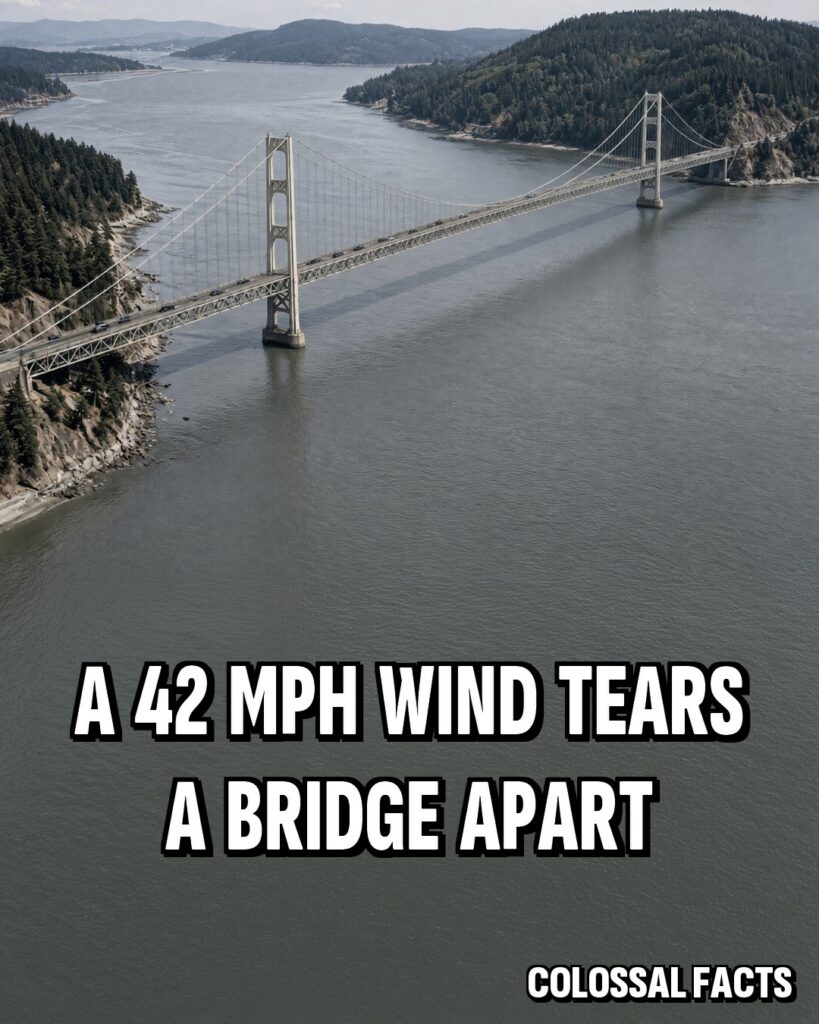
On July 1, 1940, the Tacoma Narrows Bridge opened to traffic.
Its main span ran 2,800 feet (853 meters). That made it the third-longest suspension bridge span in the world.
From the first days, wind rocked the deck up and down. Tie-down cables, meant to hold it still, did not stop the motion.
Through October, even in 50 mph (80 km/h) gusts, Galloping Gertie stayed strangely calm.
On November 7 the wind blew steadily.
About 42 mph (68 km/h).
Weaker than those October blasts.
And that is when the roadway began to twist without stopping.
Why then?
The solid plate girders and the deck acted like an airplane wing. Wind created drag and lift.
The shaking fed itself and grew.
Engineers call that aeroelastic flutter: a twisting motion that the airflow keeps driving.
The bridge was far too flexible.
The center span fell.
No person died.
A cocker spaniel died in its owner's car.
The collapse showed how little engineers then knew about wind on bridges.
After it, tests of models in wind tunnels became a key part of suspension-bridge design.
And those 2,800 feet?
As long as nine football fields, end to end.
The wind was moderate.
The shape of the bridge brought it down.
Enjoyed the story?
Follow Colossal Facts for a new story every day.
Or watch them as short videos on Facebook →