In the spring of 1943, British intelligence set a body adrift off the coast of neutral Spain, near Huelva. It was dressed as a Royal Marines officer. His briefcase carried letters. They said the Allies would strike Greece and Sardinia, not Sicily. The officer looked real. Major William Martin had a rank, papers, a bank letter, a bill for a ring, a snapshot, and a whole made-up life, down to theatre tickets and a querulous father. That major never existed. The body was Glyndwr Michael, a homeless man who had died in London. They dressed him, arranged his pockets, and on 30 April 1943 launched Operation Mincemeat into the sea, from the submarine HMS Seraph.
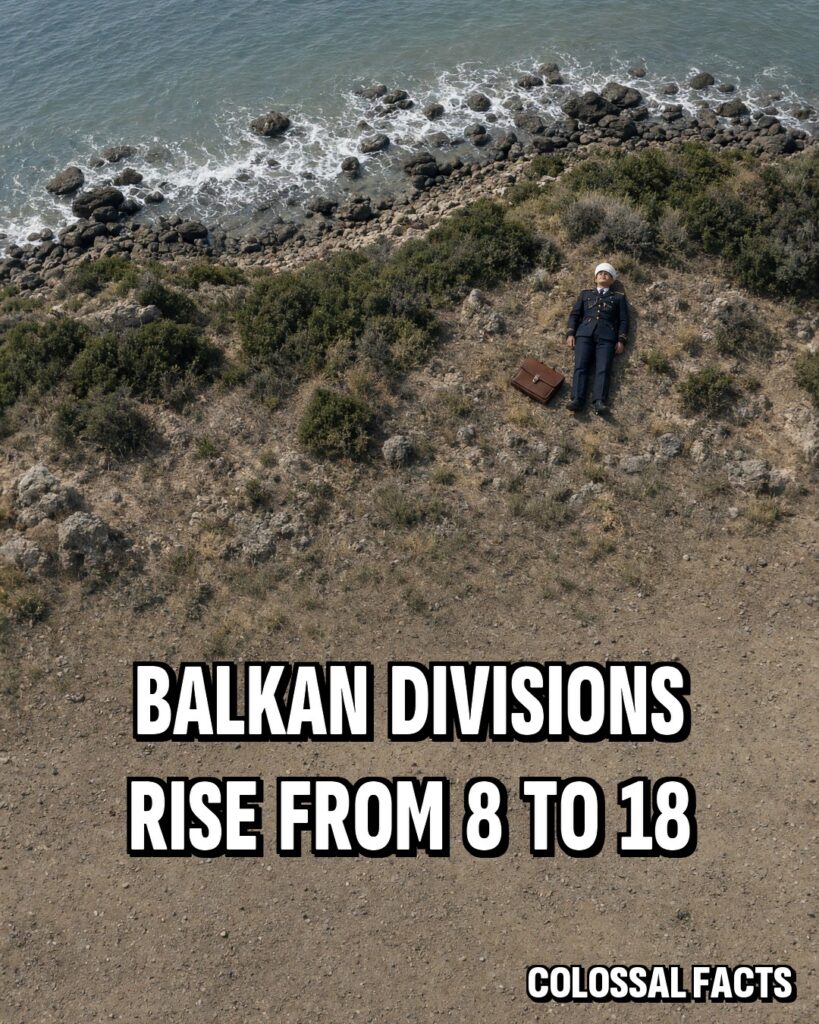
The plan was the work of British officers including Ewen Montagu and Charles Cholmondeley, under the wider deception for the invasion of Sicily, Operation Husky. Spanish authorities recovered the body and passed copies of the papers to German intelligence. Those copies reached Adolf Hitler. He believed the trick. On 14 May 1943, he told a German admiral that Sicily was not the next landing. Greece and Sardinia had to be reinforced. Between March and July, German divisions in the Balkans rose from 8 to 18, more than double. Troops also headed for Sardinia and Corsica. Aircraft, artillery, and torpedo boats left Sicily itself.
On 10 July 1943, about 180,000 Allied soldiers began the landing on Sicily. Only two German divisions were there, sent as reinforcement. Even then, Hitler called the strike a decoy, not the real target. A telegram reached London: mincemeat swallowed rod, line, and sinker. The phrase has been retold ever since, and Montagu later wrote The Man Who Never Was. The landing was still a hard fight. It was a thinner fight than it would have been if those divisions had stayed in Sicily.
A fictional officer, and a real invasion
The cruelty of the method is obvious and was obvious at the time: a dead civilian, used without his consent, became a prop in a war. The craft of it is just as clear. The papers had to survive Spanish official process and German scrutiny. The invented life had to look messy enough to be true. The choice of Spain mattered, because a neutral coast with German influence could pass the documents on and still look like a chance find, a plane lost at sea, not a plant.
Hitler guarded the wrong shore. The real landing met a thinner defense. Sicily fell, and the letters in a briefcase, wet from the Atlantic, had done part of the work that an extra army would otherwise have had to do.
Glyndwr Michael was buried in Huelva under the name on the tags, William Martin, and for years that false name stayed on the grave; it was later amended to honour the man whose body had been used. Spain’s role was not a simple leak. Officials examined the papers, the Germans were allowed to see copies, and the originals were eventually returned, apparently intact, so that London could judge whether the ruse had been ruffled. It had not been, enough for Berlin to act. Sicily, in the end, was not undefended, and Husky was not a parade. It was easier than it would have been if the 18 divisions in the Balkans had been sitting on the island the letters had so carefully said was not the target. A homeless man, a borrowed uniform, and a briefcase of lies had already gone to work months before the first landing craft.
Sources: Operation Mincemeat – Wikipedia, The deception behind the Allied invasion of Sicily – Imperial War Museums, How a corpse and fake documents fooled the Nazis – The Guardian